Intensive Trainings

- This event has passed.
Advances in 3D Seismic Interpretation
August 3 @ 8:00 am - August 7 @ 12:00 pm
Why Choose this Training Course
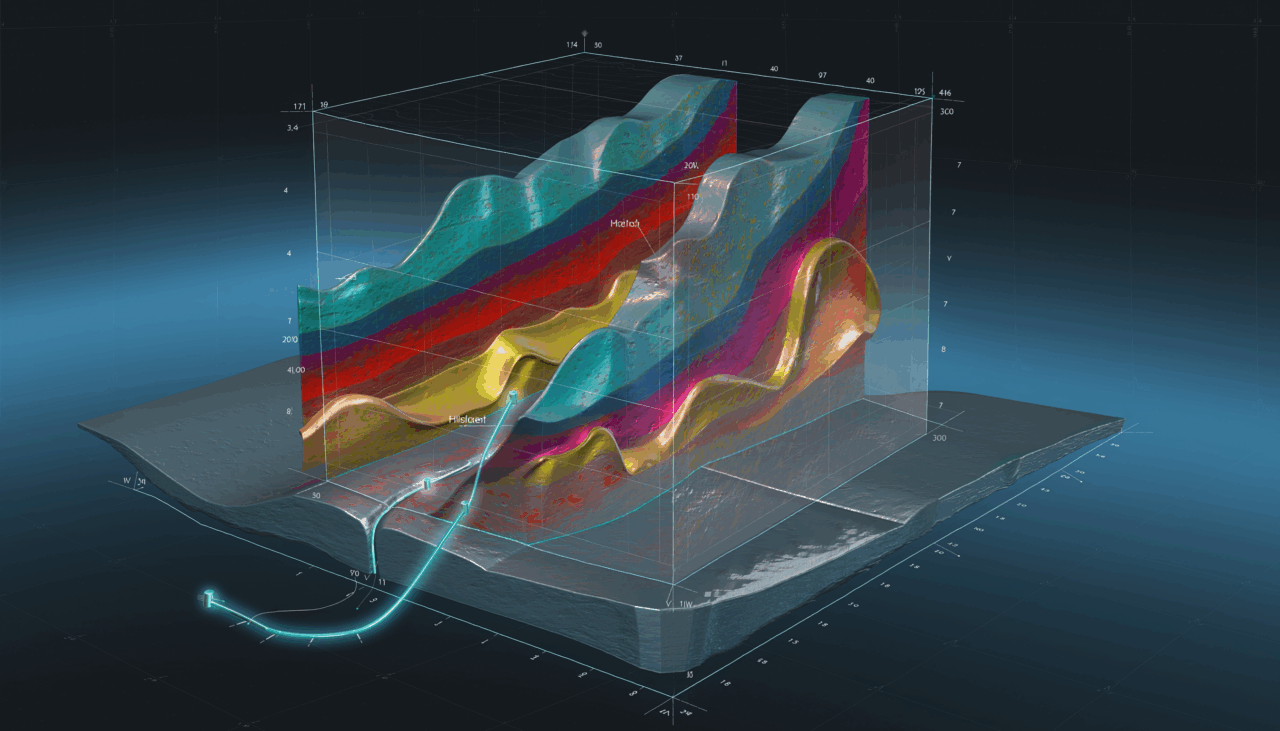
This advanced 3D seismic interpretation course provides a deep dive into the practical application of 3D seismic attributes. Participants will develop an intuitive grasp of which geological features are detectable and how acquisition and processing workflows impact attribute sensitivity. We will explore the geological “coupling” of seemingly independent attributes and evaluate modern reservoir characterization workflows used by leading software providers and service companies.
We are also a proud member of the Energy Institute of UK.
Who Should Attend
- Seismic interpreters who wish to extract meaningful information from their data
- Seismic processors who want to find out different ways to characterize heavy oil formations.
- Stratigraphers and structure geologists who use 3D seismic volumes to prepare detailed reservoir models
- Reservoir engineers who want to understand about the seismic input to add detail to 3D reservoir models.
- Students of geophysics who wish to become qualified interpreters.
Key Learning Objectives
- Enhance subtle faults and folds by utilizing attributes derived from time-structure maps and multiple azimuth-limited seismic volumes.
- Interpret spectral anomalies, thin-bed tuning, and potential hydrocarbon indicators using spectral decomposition and wavelet transform analyses.
- Optimize data visualization by applying effective color schemes and combining multiple attributes into single images to improve geological communication.
- Apply appropriate inversion algorithms—including elastic, sparse-spike, and geostatistical methods—to integrate earth models and synthetic seismograms for accurate lithologic characterization.
- Analyze seismic singularities and amplitude variations with offset and azimuth (AVO/AZ) to delineate detailed stratigraphic and structural features.
- Evaluate the limitations of data resolution and imaging quality by identifying acquisition footprints and artifacts that constrain attribute analysis.
- Implement structural filtering and migration algorithms to suppress cross-cutting noise while preserving critical narrow lineaments and fractures.
- Assess and select optimal algorithms for volumetric calculations and processing parameters to maintain rigorous quality control throughout the seismic interpretation workflow.